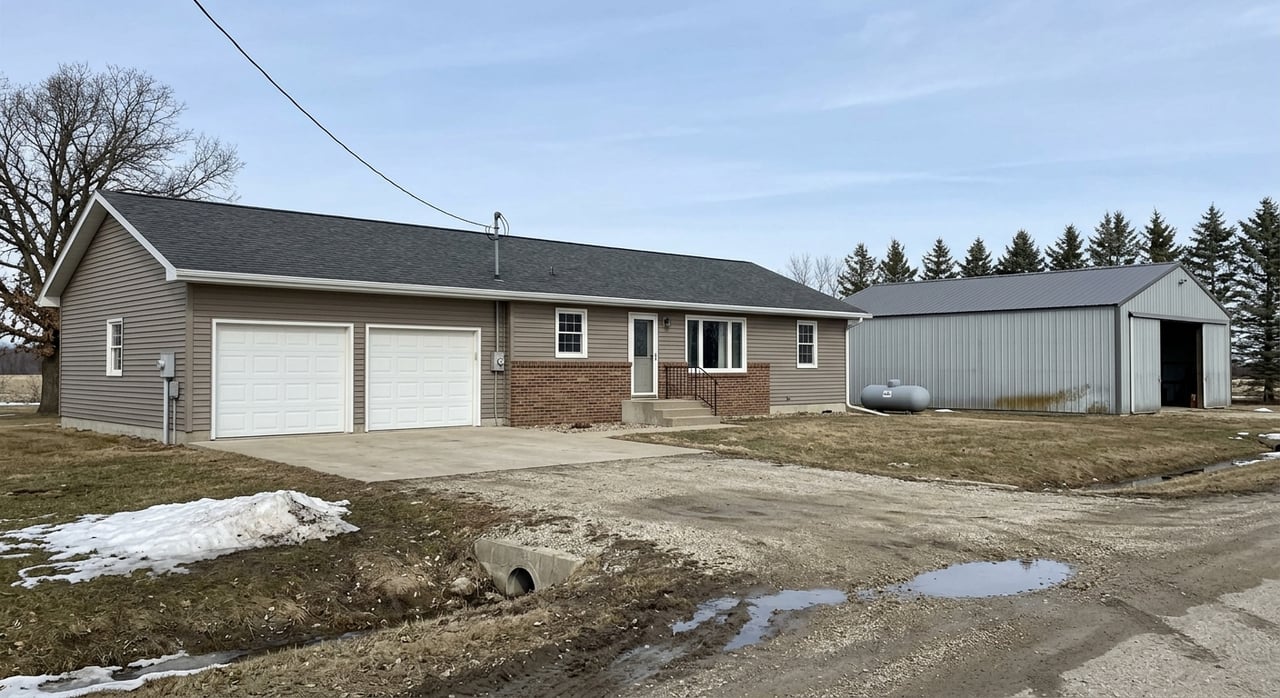
Thinking about a few acres outside Owatonna? It can feel like the perfect middle ground between town convenience and extra elbow room, but small-acreage properties often come with more moving parts than a standard in-town home. If you want space for a shop, hobby use, or simply more land to enjoy, it helps to know what to check before you fall in love with a parcel. Here’s what to look for when buying small acreage near Owatonna and across southern Minnesota.
Start With the Parcel Boundary
One of the first questions to answer is simple: where is the property actually located from a regulatory standpoint? A small-acreage home may have an Owatonna mailing address but still fall outside city limits, or it may be inside the city and subject to different rules.
In this area, that distinction matters because Owatonna manages zoning and setbacks for city parcels, while rural parcels may fall under Steele County and sometimes township oversight. Rules for land use, wells, septic systems, driveways, and outbuildings can change at the city boundary, so your due diligence should start with the parcel map, legal description, and local jurisdiction.
Steele County’s parcel tools are a helpful starting point because you can search by parcel number, address, or geocode. That early boundary check can save you time and help you avoid assumptions about what the land will allow.
Check Zoning Before You Make Plans
A small-acreage property can look flexible on the surface, but zoning often determines what you can actually do with it. If you are picturing a detached shop, a pole shed, or changes to the site, confirm the zoning district before you move too far into the buying process.
Owatonna City Rules
If the property is inside Owatonna, accessory structures are regulated by the city. Owatonna allows a maximum of two accessory structures per property, and the permit path depends in part on the size and type of structure.
Sheds, pergolas, gazebos, and detached decks under 200 square feet need a zoning permit. Accessory structures over 200 square feet need a building permit, and sheds over 120 square feet may not be placed within utility easements.
Placement matters just as much as size. The city expects setbacks to be confirmed through property irons or a licensed surveyor, and smaller sheds are generally required to sit in the rear yard with planning staff approval before a permit is issued.
Steele County Rural Rules
If the parcel is in rural Steele County, the zoning picture can be different. The county’s agricultural districts are intended to conserve agricultural land and limit scattered residential development, which means lot size, site conditions, and surrounding land uses matter.
For new dwellings in Steele County, the site must be large enough for an on-site sewage treatment system, a well, and parking. The ordinance states that the site can be no less than 2.5 acres, excluding road right-of-way, and it cannot be placed in wetlands, floodplain, or poor-drainage areas.
The property also must abut an existing public dedicated road or street and be at least 1,000 feet from an existing registered animal feedlot. In some cases, larger-lot farm dwellings may require conditional-use review, so it is important to understand whether a parcel is a straightforward residential fit or something more complex.
Outbuildings Are a Big Deal on Small Acreage
For many buyers, the appeal of small acreage is the ability to add utility space. You might want storage for equipment, a hobby building, or room for vehicles and tools. That is exactly why outbuilding rules deserve close attention.
Inside Owatonna, accessory structures are clearly regulated by permit type, quantity, placement, and setbacks. On rural land in Steele County, accessory structures may be allowed as uses customarily incidental to permitted uses, but that does not mean you should skip zoning review.
There is one more wrinkle for rural buyers. Minnesota’s State Building Code generally does not apply to agricultural buildings, although limited exceptions remain. In practice, a true agricultural building may be treated differently from a standard residential accessory structure, but zoning, layout, and utility placement still need to be verified with the local government.
Review Wells Carefully
Private wells are one of the most important due-diligence items on small acreage. Minnesota does not require private well-water testing or a well inspection at the time of transfer, but well disclosure paperwork is required at closing.
If there is no well on the property, that must be disclosed in writing. If there are wells, buyers should ask about the number, location, age, and current status of each one.
This is especially important with older rural properties. According to the Minnesota Department of Health, abandoned wells can remain on a property and may need to be sealed or returned to use properly, so a quick glance at the yard is not enough.
Lenders may also add another layer to the process. Many lenders commonly require water testing for items such as coliform bacteria and nitrate, even though the state does not require testing at transfer.
Septic Can Shape the Whole Deal
Septic systems are another major checkpoint when you buy acreage near Owatonna. In Minnesota, local governments enforce septic rules, and the right system depends heavily on soil and groundwater conditions.
That means one parcel may support a conventional setup while another may need a mound-style drainfield because of a high water table or shallow bedrock. If you are buying vacant land or a home with an older system, it is smart to ask early about compliance, location, design, and any recent inspections or updates.
Even if the house seems move-in ready, the septic system can affect cost, timing, and future plans for the site. On small acreage, utilities are rarely a detail you want to sort out after closing.
Road Access Matters More Than You Think
A long driveway and open surroundings may look appealing, but access can affect both everyday living and financing. Before you commit, confirm who maintains the road, whether access is year-round, and whether there are any shared-drive arrangements.
This matters because some financing programs look closely at access standards. USDA guidance says eligible rural sites need direct access from a street, road, or driveway, with hard-surfaced or all-weather-surfaced roads and legally enforceable maintenance arrangements.
Fannie Mae guidance also points to roads that meet local standards and properties that are suitable for year-round use. So if a home sits at the end of a long gravel lane or relies on a shared drive, it is worth verifying the details early with your lender and the appropriate local authority.
Financing a Small-Acreage Home
Not every acreage property fits the same loan box. Some homes on a few acres can still work well with standard residential financing, while others may be viewed differently if the property functions more like a farm or includes income-producing land or buildings.
USDA Rural Development financing can work for some small-acreage homes because there are no set acreage limits as long as the acreage is typical for the area. USDA also states that loans cannot be guaranteed for property used primarily for agriculture, farming, or commercial enterprise, and the site cannot include land or buildings used principally for income-producing purposes.
Fannie Mae is stricter on agricultural character. Its guide says the property must be residential in nature, served by utilities, accessible by roads that meet local standards, and suitable for year-round use, while agricultural properties such as farms or ranches are listed as ineligible.
The practical takeaway is simple: line up a lender who is comfortable with acreage early in the process. That can help you avoid surprises once the appraisal, site review, or underwriting questions begin.
A Smart Small-Acreage Checklist
When you are comparing properties around Owatonna and southern Minnesota, keep your review focused on the items that most often affect value, use, and financing.
- Confirm whether the parcel is inside Owatonna, in unincorporated Steele County, or in a township
- Verify the zoning district and ask what uses and structures are allowed
- Check setbacks, easements, and boundary lines
- Review parcel, tax, and aerial data through county tools
- Ask about permits for any existing barn, shed, shop, or accessory building
- Verify well disclosure information and ask about abandoned or unused wells
- Review septic status, design, and site conditions
- Confirm road authority, maintenance, and winter access
- Talk with a lender who understands small-acreage properties
Why Local Guidance Helps
Small-acreage purchases can be rewarding, but they are rarely one-size-fits-all. Two properties with similar price tags and similar acre counts can involve very different rules depending on location, zoning, utilities, and access.
That is where local experience makes a real difference. When you work with a team that understands Owatonna, Steele County, and the broader southern Minnesota market, you can sort through these details earlier and make decisions with more confidence.
If you are thinking about buying small acreage near Owatonna or anywhere in southern Minnesota, RE/MAX Venture can help you evaluate the property, ask the right questions, and move forward with a steady local guide by your side.
FAQs
What should you check first when buying small acreage near Owatonna?
- Start by confirming whether the parcel is inside Owatonna city limits or in rural Steele County or a township, because zoning, permitting, and land-use rules can change based on that boundary.
Do Owatonna properties allow sheds and other outbuildings?
- Yes, but Owatonna regulates accessory structures by size, number, placement, setbacks, and permit type, so you should verify the rules before planning a shed, shop, or other detached structure.
What is the minimum lot size for some new rural dwellings in Steele County?
- Steele County’s ordinance states that a new dwelling site must be large enough for a well, on-site sewage treatment system, and parking, and in no case less than 2.5 acres excluding road right-of-way.
Do you need to test a private well when buying rural property in Minnesota?
- Minnesota does not require private well-water testing at the time of transfer, but well disclosure paperwork is required at closing and many lenders commonly require testing.
Why does septic matter so much on small acreage in southern Minnesota?
- Septic design depends on site conditions like soil, groundwater, high water table, and bedrock depth, which can affect both cost and what type of system the property needs.
Can you use regular financing to buy a small-acreage home near Owatonna?
- Sometimes yes, but eligibility depends on whether the property is residential in nature, has acceptable access and utilities, and is not used primarily for agricultural or income-producing purposes.